I've talked so far about the English lexicon can be broken down into two broad categories: inherited (that is, descended from other older words that have cognates in related languages) and borrowed (that is, taken from another language). There are, however, a number of words that do not fit into this category.
The word tuxedo, for example, has the form of a Lenape word but came to us via the Tuxedo Club in Tuxedo Club, New York. We cannot accurately call this sort of word a borrowing because the meaning applied to it presently has nothing to do with the original meaning of the Lenape word.
Related to this sort of word is the genericized trademark, which is a word that was originally created as a brand name but has since come into popular use to refer to all such items of that brand category. Xerox, Kleenex, aspirin, and frisbee are all examples of this. Both tuxedo and genericized trademarks are examples of eponyms - proper nouns that become associated with, and ultimately lend their name to, a common noun.
More interesting from this perspective are words whose origins we simply do not know. One of the more popular examples of this is posh, which appeared in 1914 with no explanation of its origins. There are a variety of opinions as to where it came from; the popular backronym 'Port Out, Starboard Home' has been dismissed time and time again, and attempts to link it to an early term referring to a half-penny pretty incredible.
Due to the presence of so much literature from the time that posh came into existence, we have a decent chance of discovering its true origin, or at least coming up with a very likely hypothesis. And at any rate, a word like posh is fairly insignificant and uncommonly used, and is the sort of word that may come about via neologism - the creation of new words. Words like cool and neat have clear origins, but have been neologized to mean something completely different.
The most troubling of these words with unclear origins are those with very long histories in English; among these are pig, dog, and bird. The Germanic ancestor of English had no difficulty expressing these words - ancestral Germanic equivalents have been preserved alongside these newer words as swine, hound, and fowl.
All of these words are extremely old: according to the Oxford English Dictionary, pig is dated as far back as the 14th Century (first attested in Chaucer), dog back to 1400, and bird to 800 (when it was originally pronounced as brid).
There are all sorts of theories as to the origins of these words. Some have attempted to connect bird to the words breed and brood, but the OED finds this unlikely. Dog appears to have originally referred to a specific breed of dog, and eventually came to replace hound as the main term used to refer to Canis lupus familiaris. This, however, tells us nothing about where this word came from. As for pig, there is a near-complete lack of hypotheses regarding its origin.
One theory that may account for all three of these words is that they are Indo-European relics that were lost in the other Germanic languages. Another is that these words are Celtic in origin. English has remarkably few words of Celtic origin, so it is possible that these words were borrowed from the Celts who inhabited early Britain. The only problem with this hypothesis is that there are no cognates in Welsh or Breton, the closest relatives of what would have been spoken in England when the Anglo-Saxons came over, so we are once again left with little to back our claim.
If we want a complete history of English, we naturally want etymologies for the most common words. In the case of some very common words, however, we must resign ourselves to speculation until we reach the point that new data comes along to prove or disprove our favorite hypotheses.
Monday, February 27, 2012

Friday, February 17, 2012
War
What is it good for? Showing us the differences between standard French and the Norman French that affected English.
We can break down the history of English into a number of periods based on where significant loan words came from. During the Anglo-Saxon period, and even earlier, the continental ancestor of English borrowed quite a bit of vocabulary from Latin and the early descendants of Latin. (One of these early loans is 'cheese'. Think Spanish queso and German Käse.) After the Anglo-Saxons moved to England, they were ultimately conquered by the Romans, and once again gained some Latin vocabulary. In the 790s, Vikings who spoke Old Norse invaded Britain, lending us words like 'skirt' and 'sky' (as discussed before).
One of the most significant events in the history of English took place in 1066, when William, Duke of Normandy, conquered England and deposed Anglo-Saxon king Harold II, who was shot through the eye. This event, the Battle of Hastings (which actually took place in what is now the town of Battle, East Sussex) marks the transition from Old English to Middle English.
Although the sudden influx of Norman nobles was a rather dramatic political change for England, essentially no one began speaking French, and, over time, the nobility came to speak that language of the locals. A couple of hundred years later the English and the French began fighting a number of wars that no one understands, and English was even more firmly established as the language of England.
I've mentioned before that a large number of social, political, culinary, and legal terms were among the words borrowed from the Normans; although no one actually wanted to learn French, by employing fancy French terms, the English locals could aspire to be more like their lords. Among the words borrowed from French at this time were venison, beef, mutton, attorney, royal, army, fruit, and war.
Those of you who speak French will recognize that the French word for 'war' is guerre. So what gives?
What we must remember is that French (like essentially every other widely spoken language) has a large number of dialects. One of these many dialects (or, if you prefer, varieties) is Norman French, which is what William I spoke. Norman French underwent a number of sound changes not undergone by standard French, and was not affected by certain changes that did affect standard French. We can therefore find correspondances between Norman and French that explain quite a bit about why English words of 'French' origin so often look little like standard French.
One correspondence is between the sh/ch sound and the /s/ sound (often represented in French as <ç>. We see this in English fashion and French façon and in cherries vs. cerise. Another correspondence we often see is between /w/ and /g/ or. We see this not only in war vs. guerre, but also in warden vs. guardian (itself a later loan from standard French) and wardrobe vs. garderobe.
If you speak Latin, you may be wondering where French guerre came from; after all, the word for 'war' in Latin is bellum, which has no clear relationship with guerre. The answer to this question is rather complex and shows how borrowing is truly a two-way street.
War, as it happens, was originally a Germanic word, and was therefore present in some language ancestral to English. The Old High Germanic word werra is apparently related to other words meaning 'bad thing', like worse. Werra was borrowed into Medieval Latin and the medieval Romance languages, due in part to the confusion between bellum 'war' and bellus/bella 'beautiful'. Because most of these languages had difficulties with words beginning in /w/, this sound was reinterpreted as a /gu/ sound. From this form we get Spanish and Portuguese guerra, French guerre, and Norman werre. This Norman form was borrowed into English as war, completing the circle from Germanic to Romance to Germanic.
The modern Germanic languages have lost any word resembling Old High Germanic werra; German uses krieg, Dutch uses oorlog, and Icelandic uses stríð. German verwirren 'to confuse' is apparently a surviving cognate, albeit one with a much diminished meaning.
As for the Norman language, it survives today, despite the fact that the French make no attempt to preserve regional languages. It's spoken in Normandy still, and actually has protection in the UK, as it spoken in the Channel Islands under the various monikers of Jèrriais (on Jersey) Guernésiais (on Guernsey) and Sercquiais (on Sark). If you want to have your mind blown, listen to La Lettre Jerriais on BBC Radio Jersey. It's quite different from standard French and definitely not just French spoken with a bad English accent.
The Norman spirit, and the status of the British monarch as the Duke of Normandy, is alive and well today, as the people of the Channel Islands toast to La reine, notre duc - the Queen, our Duke.
We can break down the history of English into a number of periods based on where significant loan words came from. During the Anglo-Saxon period, and even earlier, the continental ancestor of English borrowed quite a bit of vocabulary from Latin and the early descendants of Latin. (One of these early loans is 'cheese'. Think Spanish queso and German Käse.) After the Anglo-Saxons moved to England, they were ultimately conquered by the Romans, and once again gained some Latin vocabulary. In the 790s, Vikings who spoke Old Norse invaded Britain, lending us words like 'skirt' and 'sky' (as discussed before).
One of the most significant events in the history of English took place in 1066, when William, Duke of Normandy, conquered England and deposed Anglo-Saxon king Harold II, who was shot through the eye. This event, the Battle of Hastings (which actually took place in what is now the town of Battle, East Sussex) marks the transition from Old English to Middle English.
Although the sudden influx of Norman nobles was a rather dramatic political change for England, essentially no one began speaking French, and, over time, the nobility came to speak that language of the locals. A couple of hundred years later the English and the French began fighting a number of wars that no one understands, and English was even more firmly established as the language of England.
I've mentioned before that a large number of social, political, culinary, and legal terms were among the words borrowed from the Normans; although no one actually wanted to learn French, by employing fancy French terms, the English locals could aspire to be more like their lords. Among the words borrowed from French at this time were venison, beef, mutton, attorney, royal, army, fruit, and war.
Those of you who speak French will recognize that the French word for 'war' is guerre. So what gives?
What we must remember is that French (like essentially every other widely spoken language) has a large number of dialects. One of these many dialects (or, if you prefer, varieties) is Norman French, which is what William I spoke. Norman French underwent a number of sound changes not undergone by standard French, and was not affected by certain changes that did affect standard French. We can therefore find correspondances between Norman and French that explain quite a bit about why English words of 'French' origin so often look little like standard French.
One correspondence is between the sh/ch sound and the /s/ sound (often represented in French as <ç>. We see this in English fashion and French façon and in cherries vs. cerise. Another correspondence we often see is between /w/ and /g/ or
If you speak Latin, you may be wondering where French guerre came from; after all, the word for 'war' in Latin is bellum, which has no clear relationship with guerre. The answer to this question is rather complex and shows how borrowing is truly a two-way street.
War, as it happens, was originally a Germanic word, and was therefore present in some language ancestral to English. The Old High Germanic word werra is apparently related to other words meaning 'bad thing', like worse. Werra was borrowed into Medieval Latin and the medieval Romance languages, due in part to the confusion between bellum 'war' and bellus/bella 'beautiful'. Because most of these languages had difficulties with words beginning in /w/, this sound was reinterpreted as a /gu/ sound. From this form we get Spanish and Portuguese guerra, French guerre, and Norman werre. This Norman form was borrowed into English as war, completing the circle from Germanic to Romance to Germanic.
The modern Germanic languages have lost any word resembling Old High Germanic werra; German uses krieg, Dutch uses oorlog, and Icelandic uses stríð. German verwirren 'to confuse' is apparently a surviving cognate, albeit one with a much diminished meaning.
As for the Norman language, it survives today, despite the fact that the French make no attempt to preserve regional languages. It's spoken in Normandy still, and actually has protection in the UK, as it spoken in the Channel Islands under the various monikers of Jèrriais (on Jersey) Guernésiais (on Guernsey) and Sercquiais (on Sark). If you want to have your mind blown, listen to La Lettre Jerriais on BBC Radio Jersey. It's quite different from standard French and definitely not just French spoken with a bad English accent.
The Norman spirit, and the status of the British monarch as the Duke of Normandy, is alive and well today, as the people of the Channel Islands toast to La reine, notre duc - the Queen, our Duke.
Thursday, February 16, 2012
Foot
Most English vocabulary is nowhere near as sexy or interesting as words like tuxedo or avocado. In fact, the majority of the words that we actually use on a day to day basis belong to what linguists call 'inherited vocabulary'. Inherited vocabulary (sometimes inherited lexicon) is the set of words that have always been in our language and which were in the earliest versions of our language. This contrasts with borrowed vocabulary, which is the set of words that have their origins in some other language and which were picked up along the way.
Related to the notion of inherited vocabulary is basic vocabulary, which is the set of words in a language that comprise the majority of those words that we use most often and which are the least resistant to borrowing. Words for body parts, weather phenomena, common animals and plants, numbers, etc., etc. tend to be very old words, where as terms relating to material culture, science, or religion tend to be borrowings. Compare, for example, deer, sheep, and cow (all part of our inherited lexicon) with venison, mutton, and beef, which are all words borrowed from the Norman French.
One of these very old words in English is foot. One way to tell whether a word is old, or whether it has been borrowed is to look at related languages to see if there are cognates - words (or parts of words) derived from the same ancestral word. For English, this means looking at other languages of the Germanic language family (of which English is a member), as well as other Indo-European languages. The Indo-European language family is a very large language family spoken (presently) on every continent; in addition to the Germanic sub-family, other sub-families of Indo-European include Italic (which includes the Romance languages), Celtic, Slavic, Indic, Iranian, Greek, and a few others.
When we look for cognates, we cannot expect to find that these cognate forms will look (or, rather, sound) exactly like English. This is because over time, the sounds of language change in regular ways. Take these cognate forms in other Germanic languages:
German: Fuss
Dutch: voet
Swedish: fot
If we ignore the vowels for now (which get messy for reasons too complicated to get into here), we notice that only Swedish has the same f_t pattern that we see in English. If, however, we assume that there are regular sound correspondences between these related languages, we can test our hypothesis that all of these words are related. In German, we expect a correspondence between word final -t and word final -ß (which is pronounced like /s/). This theory holds up quite well:
hot:heiß
white:weiß
float:floß
We can do the same thing with Dutch, anticipating a correspondence between word-initial f- and v-:
fly:vlieg
father:vader
five:vijf
We now know that these correspondence are not chance occurrences, but, rather, are the result of sound changes that occurred within descendants of a single, original word.
I mentioned a larger Indo-European family before, and we can find similar correspondences between other, more distantly related languages and English. We'll start with Latin, Ancient Greek, and Sanskrit, just like the linguists who originally formulated the Indo-European theory. Here are the words for foot in all of them:
Latin: pēs
Greek: póus
Sanskrit: padá
Once again we'll ignore the vowels (they can be accounted for), and we'll also ignore the -s sounds at the end of the Greek and Latin forms (but will keep in mind that other Latin case forms contain a /d/ sound: e.g. genitive pedis). What we immediately notice is that all of these forms begin with /p/.
Once again, we can find correspondences that demonstrate that where these languages have /p/ sounds, English has /f/ sounds:
English: father, five, four
Latin: pater, quinque (originally pinque)
Greek: patír, pénte
Sanskrit: pitṛ́, pāñcan
It's hard to find correspondences that work for all four languages, in part because later sound changes, or sound changes that apply to combinations of sounds, can complicate these correspondences. At any rate, what we're looking at is a perfect demonstration of Grimm's Law in action. Grimm's Law (named for the Brothers Grimm, who were much more than collectors of folklore) states (among other things) that voiceless stops in most other Indo-European languages (that is p/t/k) will correspond to fricatives (that is, f/th/h) in the the Germanic languages. Thus, we find not only cognates like those above, but also cognates like Irish trí: 'three' and Greek kánnabis: hemp.
If we look at other languages within the Indo-European language family, we find that foot has cognates in almost all branches:
Hittite (Anatolian): patas
Lithuanian (Baltic): pėda
Irish (Celtic): cos (this is a cognate, but a number of other changes have occurred)
Persian (Iranian): på
Spanish (Romance): pie
Tocharian: paiyye
The last language mentioned there, Tocharian, is an extinct member of an extinct branch of Indo-European once spoken in Central Asia.
While the word 'foot' may not be particularly glamorous, it's illustrative of the very ancient history of many of the words we use every day. If we look out for cognates in related languages, what we consider foreign becomes much more familiar.
Saturday, February 11, 2012
Avocado
Avocados are great fruit -- they're high in potassium and B-vitamins,  have a decent amount of fiber, and contain lots of healthy vegetable fats. Once you learn the etymology of avocado, however, you might be a little turned off.
Like many of the foods we eat (tomatoes, potatoes, chili peppers, corn), avocados are a New World fruit. The name for this fruit comes, not surprisingly, from a New World language. Specifically, the word avocado comes from the language of the Aztecs, Nahuatl, where it's called āhuacatl. The English form of this word appears to have come via Spanish aguacate which, through folk etymology, was collapsed with the pre-existing Spanish word avocado, meaning 'advocate' or 'lawyer'. (The modern Spanish form is abogado.) The Nahuatl form of the word has it's own interesting etymology: in addition to referring to the fruit, āhuacatl is Nahuatl for testicle, which is a clear reference to the shape of the fruit.
There are two other words in the avocado family whose relation to avocado is not immediately apparent. The first of these words is guacamole.
Guacamole appears to be something that the Aztecs ate, and just like avocado, guacamole has its roots in Nahuatl. The English word guacamole was borrowed with minimal sound change from Spanish, which uses the same word. Spanish, in turn, borrowed the word from Nahuatl āhuacamōlli. This Nahuatl word is a compound consisting of āhuaca+mōlli. The āhuaca part is simply āhuacatl minus the -tl, while mōlli means 'sauce'. This last portion is the source for Spanish mole, and the specific type of mole chilmole is another example of a Nahuatl compound (chilli + mole).
 The second other word in this family is Advocaat, a nasty egg-yolk liqueur typically associated with the Dutch. (Who exactly invented Advocaat is not clear, but there are similar versions in Poland and southern Germany, and even our own eggnog has some certain similarities.)
It seems that the Dutch are willing to try making booze out of anything, and avocados are no exception. (A further example of this tendency is eggplant wine that my friend had in Suriname, a former Dutch colony.) As the stories go, the Dutch in the West Indies and South America learned avocado cultivation from the Spanish, and much like the English, they inherited the avocado form of the name, associated it with their own word for lawyer: advocaat, and named the liqueur that they produced after the fruit it was named from. When the Dutch returned to the Netherlands, they apparently missed their avocado-booze so much that they attempted to recreate something with the texture and fat content of avocado liqueur, and came up with egg yolk liqueur.
From the Aztec term for 'testicle' we've gotten three new words: avocado, guacamole, and advocaat. Not a bad fate for an unusual word.
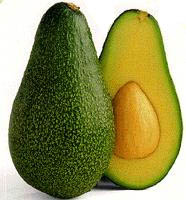 have a decent amount of fiber, and contain lots of healthy vegetable fats. Once you learn the etymology of avocado, however, you might be a little turned off.
Like many of the foods we eat (tomatoes, potatoes, chili peppers, corn), avocados are a New World fruit. The name for this fruit comes, not surprisingly, from a New World language. Specifically, the word avocado comes from the language of the Aztecs, Nahuatl, where it's called āhuacatl. The English form of this word appears to have come via Spanish aguacate which, through folk etymology, was collapsed with the pre-existing Spanish word avocado, meaning 'advocate' or 'lawyer'. (The modern Spanish form is abogado.) The Nahuatl form of the word has it's own interesting etymology: in addition to referring to the fruit, āhuacatl is Nahuatl for testicle, which is a clear reference to the shape of the fruit.
There are two other words in the avocado family whose relation to avocado is not immediately apparent. The first of these words is guacamole.
Guacamole appears to be something that the Aztecs ate, and just like avocado, guacamole has its roots in Nahuatl. The English word guacamole was borrowed with minimal sound change from Spanish, which uses the same word. Spanish, in turn, borrowed the word from Nahuatl āhuacamōlli. This Nahuatl word is a compound consisting of āhuaca+mōlli. The āhuaca part is simply āhuacatl minus the -tl, while mōlli means 'sauce'. This last portion is the source for Spanish mole, and the specific type of mole chilmole is another example of a Nahuatl compound (chilli + mole).
 The second other word in this family is Advocaat, a nasty egg-yolk liqueur typically associated with the Dutch. (Who exactly invented Advocaat is not clear, but there are similar versions in Poland and southern Germany, and even our own eggnog has some certain similarities.)
It seems that the Dutch are willing to try making booze out of anything, and avocados are no exception. (A further example of this tendency is eggplant wine that my friend had in Suriname, a former Dutch colony.) As the stories go, the Dutch in the West Indies and South America learned avocado cultivation from the Spanish, and much like the English, they inherited the avocado form of the name, associated it with their own word for lawyer: advocaat, and named the liqueur that they produced after the fruit it was named from. When the Dutch returned to the Netherlands, they apparently missed their avocado-booze so much that they attempted to recreate something with the texture and fat content of avocado liqueur, and came up with egg yolk liqueur.
From the Aztec term for 'testicle' we've gotten three new words: avocado, guacamole, and advocaat. Not a bad fate for an unusual word.
Thursday, February 2, 2012
Short shrift
As languages change, they occasionally lose words. Once common words become obsolete and are replaced by new ones. The most interesting cases of word-loss occur when a word ceases to be used independently, but is instead fossilized in select phrases.
One of these fossilized words is shrift, which presently occurs only in the phrase short-shrift. Both shrift and short shrift have undertaken meandering semantic paths, so it's probably best to start at the beginning, with the long-forgotten word shrive.
The word shrive is a word inherited from an older German form meaning 'to write' (compare German schreiben) which was, in turn, a very early borrowing from Latin scribere (compare Spanish escribir, French écrire). In the oldest forms of English, the form of the word was scrífan, and, like other words, underwent the sound change sk→sh. (See the post on skirt/shirt for further details.) At early stages, shrive and write were synonyms.
Over time, the write came to be used as the predominant word to indicate the action of committing language to physical form, and shrive took a back seat to its competitor. As often happens with words that become obsolete, the meaning of shrive narrowed considerably, coming to mean to impose penance. Whereas write gained special meanings in the legal sphere (e.g. writ of habeas corpus), shrive gained special meaning in the religious sphere. It's not hard to make the leap between the generic meaning of writing to the specifically religious meaning of penance, especially because in the earliest days of English, it was largely only the clergy who could read and write.
The form shrift, then, was one of the past participles of shrive (I shrive. You shrove. We have shriven/shrift. Compare drive/drove/driven with the word drift.) The form short shrift came to be used to mean the period of time between sentencing and execution in which a convicted criminal was allowed to confess (and possibly even repent). As this practice went out of style, the phrase came to mean 'quick work' or 'a task easily done'. This may have had something to do with the notion of the short shrift being a break or respite, or it may be connected to the similar sounds of shrift and shift.
Due to changes in law, religion, and language, shrive is no longer with us except in its participial form shrift. A similarly fossilized term is wrought (as in wrought iron). In the case of wrought, the companion finite form of the verb still exists: work. Languages often become more regular over time, so work lost its irregular past participle wrought and presently only worked is found. Wrought managed to stay on as a descriptor of worked metals and in the phrase What hath God wrought?!
Many of the words and pieces of words we find only in phrases or compounds do have real (and very often familiar) etymologies. Looking at words and phrases like cran-berry, run amok, and vim and vigor, we find that all of these are derived from once productive linguistic forms, but are now fossils in our language, waiting to be dug up by etymologists.
Subscribe to:
Posts (Atom)